Goals to cut infant mortality: 5 of 8 came true on time. The US expected 4.5 per 1,000 by 2010 and got 6.15
- India: 25 by 201733
- India: 28 by 201930
- US: 4.5 by 20106.15
- US: 6 by 20205.42
- China: 12 by 20158.1
- China: 7.5 by 20205.4
- Russia: 7.5 by 20185.1
- Russia: 4.5 by 20244
Deaths under one per 1,000 births in the deadline year
5 of 8 came true on time. The US expected 4.5 per 1,000 by 2010 and got 6.15.
China and Russia beat their targets. India reached 28 per 1,000 a year late. The US target for 2020 was more modest, 6 per 1,000, and was passed in 2012.
More
Infant mortality is how many of every thousand babies born die before their first birthday. The governments of four countries set targets to lower it. Here the target is beside what came out in the deadline year.
A row is one promise: who, what and by when. The question is whether at least half came true. Answer Yes or No, or just open the answer: each row gets its outcome and what actually came of it, the card a stamp counting those that came true. Quotes and links to the facts are below.
- US: 4.5 by 2010 — U.S. Department of Health and Human Services, 2000 infant deaths per 1,000 live births
promised 5 by 2010; fact 6 (137%). Infant mortality in 2010 was 6.15 per 1,000, against a target of 4.5.
NCHS, National Vital Statistics Reports vol. 72 no. 10 (2023), Table 13
- India: 25 by 2017 — Government of India (Manmohan Singh), Planning Commission, 2012 per 1,000 live births
promised 25 by 2017; fact 33 (132%). In 2017 infant mortality was 33 per 1,000 live births against a target of 25; 27 in 2021.
Office of the Registrar General, Sample Registration System, Statistical Report
- India: 28 by 2019 — Government of India (Narendra Modi), 2017 per 1,000 live births
promised 28 by 2019; fact 30 (107%). The target was 28 per 1,000 by 2019; in 2019 it was 30, and 28 was reached in 2020.
- US: 6 by 2020 — U.S. Department of Health and Human Services, 2010 infant deaths per 1,000 live births
promised 6 by 2020; fact 5 (90%). Infant mortality in 2020 was 5.42 per 1,000 against a target of 6.0; it has been below target since 2012.
NCHS, National Vital Statistics Reports vol. 72 no. 10 (2023), Table 13
- Russia: 4.5 by 2024 — Vladimir Putin, 2018 infant deaths per 1,000 live births
promised 5 by 2024; fact 4 (89%). The goal was at most 4.5 per 1,000 births in 2024; it was 4.0 (preliminary data).
- China: 7.5 by 2020 — CPC Central Committee and State Council, 2016 per 1,000 live births
promised 8 by 2020; fact 5 (72%). The target was 7.5 per 1,000 in 2020; it was 5.4 in 2020 and 4.0 in 2024, below the 2030 target of 5.0.
- China: 12 by 2015 — State Council of China, 2011 per 1,000 live births
promised 12 by 2015; fact 8 (68%). The plan was 12 per 1,000 by 2015; in 2015 it was 8.1 (already 12.1 in 2011).
- Russia: 7.5 by 2018 — Vladimir Putin, 2012 infant deaths per 1,000 live births
promised 8 by 2018; fact 5 (68%). The goal was at most 7.5 per 1,000 by 2018; it was 5.1.
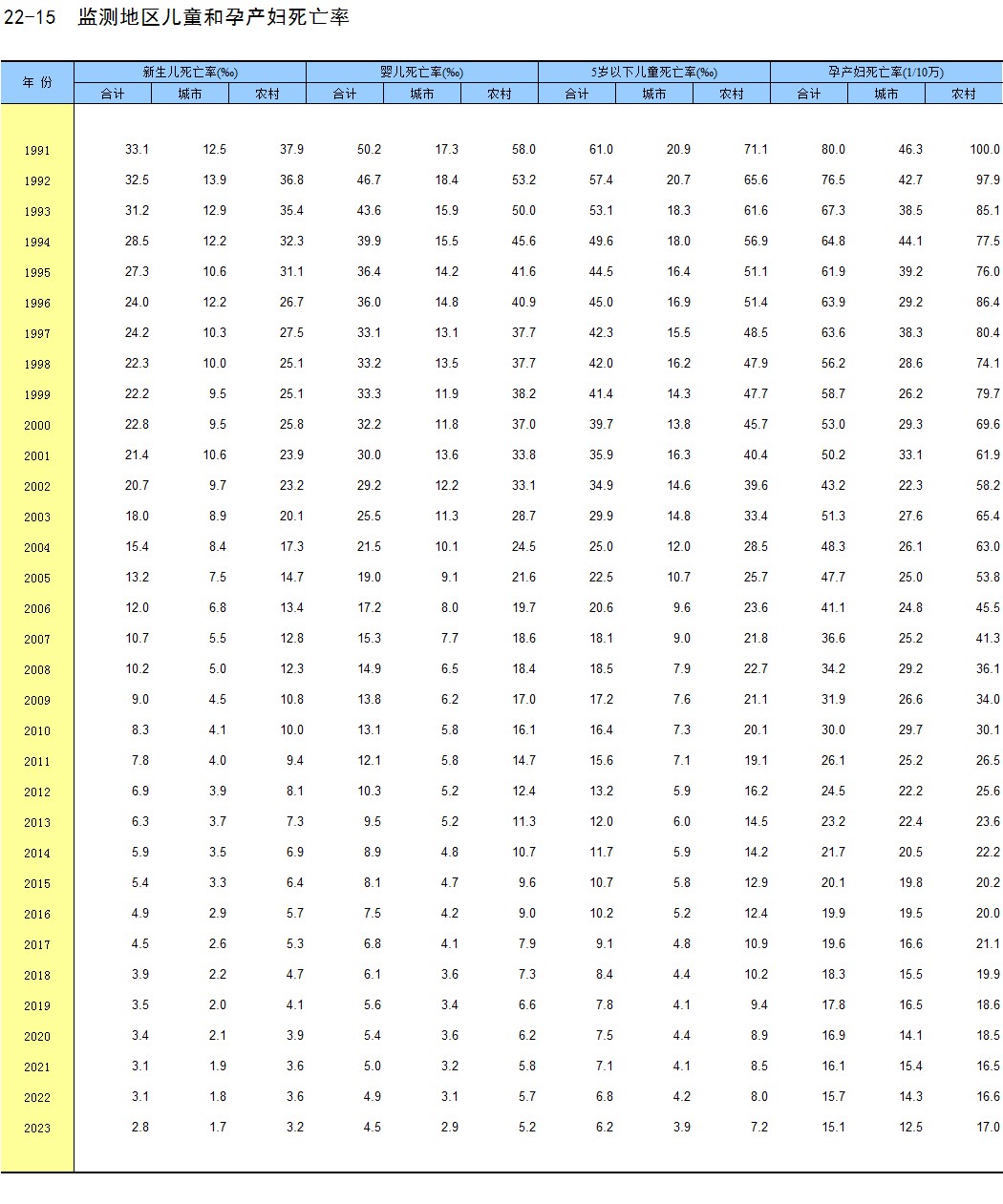
Targets: verbatim from India’s five-year plan and health policy, the US Department of Health’s «Healthy People» programmes, China’s State Council plans and Russia’s presidential decrees. Fact: national statistics: India’s Sample Registration System, the US National Center for Health Statistics, China’s statistical yearbook, Rosstat. Outcome: «came true» — the promised number reached by the deadline («about» within 5%), an event happened before the end of the year promised; «exceeded» — with room to spare; «nearly» — short by no more than 10%; «late» — reached, but after the deadline; «did not come true» — not reached; «came true, then undone» — reached, then reversed. The deadline is the end of the year named.
Countries count differently, so levels of different countries cannot be compared directly: China uses its maternal and child surveillance system, not full registration, and UN estimates for it are higher; India uses sample registration. Since 2012 Russia counts babies from 500 grams as live births, which raised the rate then. The US targets are benchmarks of a health programme, not candidates’ promises.
A question for this picture
Why are some targets reached early and others late, when mortality is falling everywhere?